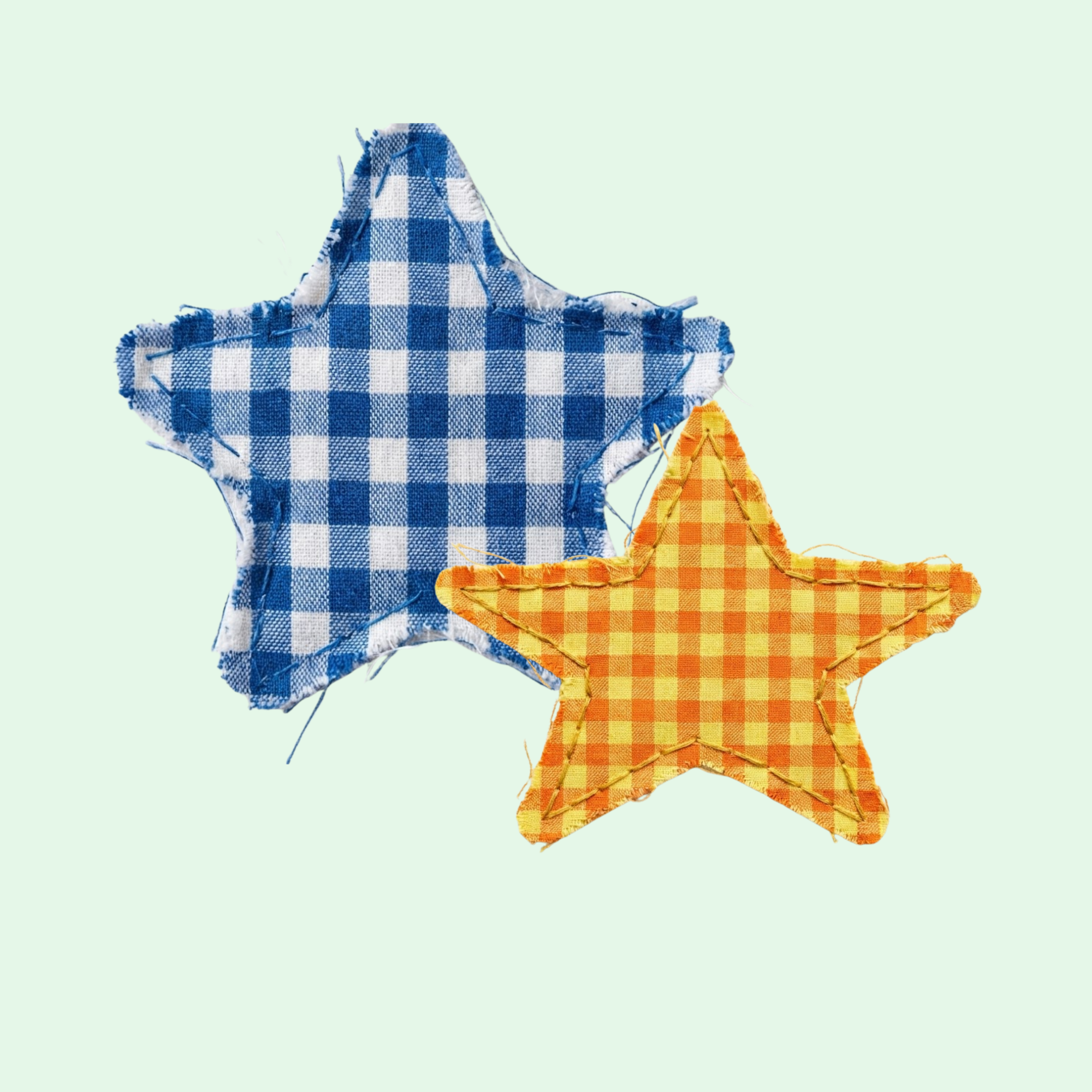
Interrupted

It's been a few days since I wrote the last entry, and that doesn't mean I haven't been making — rather, it means I've been busy making money, to pay the bills, fund the oversized textile habit, and my son's need for freshly made deli sandwiches (which involves a car journey, since we're in the Catskills). But after a few fascinating, productive days interviewing women in New York City, I'm back on my balcony, surrounded by hemlock and maple trees, and — without quite noticing it happen — I've apparently organised all the textiles in my life into colour-coded, use-based containers (appliqué, say, versus embroidery, versus neutrals set aside for dyeing).
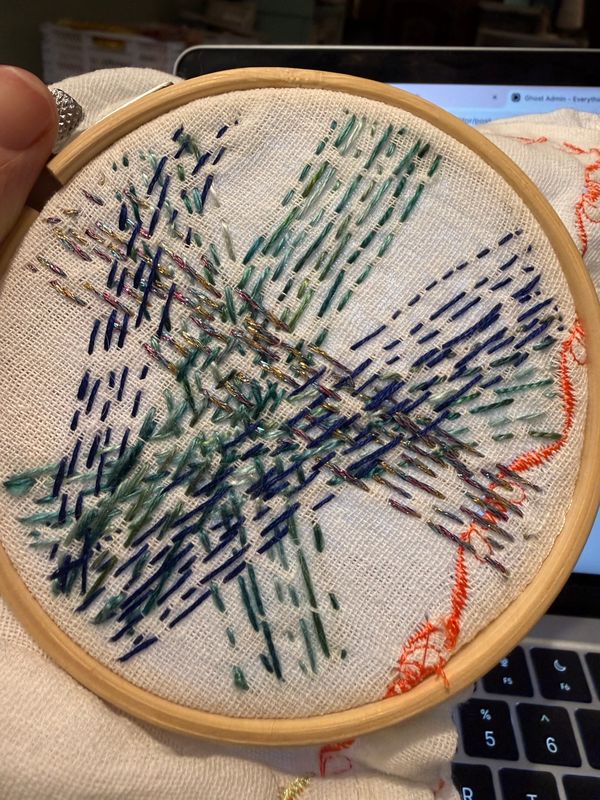
Even in my hotel room in New York, I kept working, little by little, at my textile book club prompts, and made an abstract rendition of the orange lilies that grow wild near my home and enchant me every summer. Funny, given that when I picked some last year and brought them into the house, they smelled so bad I had to remove them, spray air freshener, and mop the floor — and even then the smell lingered. The moral, apparently: some things are better left growing where they are.
Casting my eye over my flour sack notebook from Dollar General, I notice two red triangles, sewn by me. What are they? Perhaps they're symbolic of the unexpected pre-surgery blood transfusion my sister had to endure this week. Rereading that, as an aside — I wonder whether women of old (for it was almost always women) unconsciously, or half-consciously, embroidered abstract or concrete references to the vagaries of their lives into the arpilleras, the Bayeux Tapestry, their samplers.
Thinking about difficult things happening to people I love, I notice — as easily as I noticed the two red triangles — that I've felt mildly tearful, tired, and rudderless for the last 48 hours. Maybe it's fatigue. Maybe it's the anxiety that sometimes surrounds my client-facing work — imposter syndrome — or leaving my son home alone, or the general state of the world and where my little family sits inside it.
What I've noticed, though, is what I do in response: I turn to my many, always-"snackable" textile projects. I pick up a weirdly synthetic-smelling knitting needle, fold some scraps for a future workshop, do a bit of aimless sewing — anything to blunt the sharpest edge of the feeling. This, instead of scrolling, or other salves. And I'm not just being glib when I say this act of distraction and grounding and creativity and material proximity works like an aspirin for what's troubling me.
But is it an aspirin? Or is it a way of staying inside the discomfort, just with company? Let me actually look at what's happening here. When I work with materials — literally and metaphorically — in response to something painful, I don't forget what's going on. I'm still turning it over. But the repetitive motions, the small decisions, the plain sensory pleasure of the thing itself, loosen something. They clarify my thinking. They open up a kind of mental room I can move around in, which gives me access to a broader range of possible responses, more hopeful outcomes than I'd otherwise let myself see.
We are, after all, still talking about knitting — there's no hiding the dropped stitches of a life. But crucially, the act of making also does something gentler: it massages a bit of self-compassion out of an otherwise pretty harsh critic.
So, to the nightdress. On a sunny morning on the balcony, I clipped the separate pieces together — the ones that had been hanging sadly over the chair — and slipped the whole thing over my head, and stood in front of the mirror. The fabric I'd disliked caressed my skin. Something happened that the separate pieces, hanging apart, could never have given me.
—
A PANEL CONVENES ON THE BALCONY, MID-TRIUMPH, MID-DISASTER
THE NIGHTDRESS FABRIC (now, finally, a nightdress): Told you.
ALPACA: You did tell us.
THE NIGHTDRESS FABRIC: I never needed her to like me. I needed to be worn. Look at me. I'm draping.
SEAFOAM COTTON (from a less triumphant corner of the balcony): Meanwhile, some of us are being destroyed. Again.
ALPACA: I wouldn't say destroyed.
SEAFOAM COTTON: I would. I have a hole in me shaped like a phone call she took mid-row.
ALPACA: At least you're memorable.
EMILY RETURNS TO HER CHAIR ON THE BALCONY FEELING AS IF SOMETHING OR SOMEONE HAS JUST BEEN THERE....
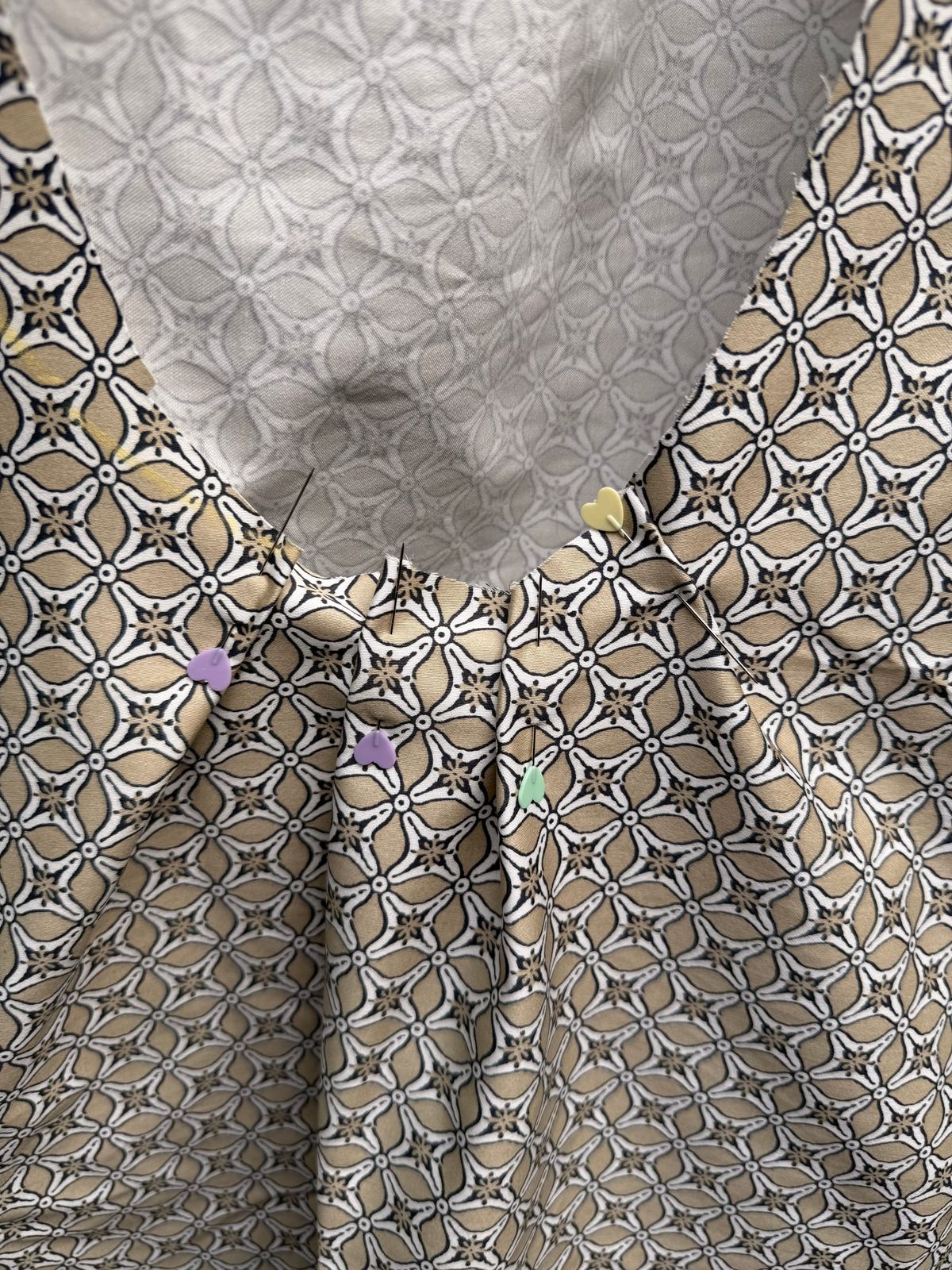
So, the nightdress. It was an item of clothing now, not pieces — fresh, solid but cool against my skin. It draped well, and with a few pins, wielded like a fashion pro (I liked to think), I made a pleasing gather at the neckline, scraping myself with those same pins, but not like a fashio pro - as I lifted the garment back off to return it, kind of whole now, to the chair, to wait its turn to be finished. When I leave materials unfinished but visibly on their way to something, they call to me, until I go back and make the final cut.
Nightdress-gate has, clearly, resolved happily. In the same window of time I also managed to destroy, or at least badly compromise, several other pieces of knitting. Again.
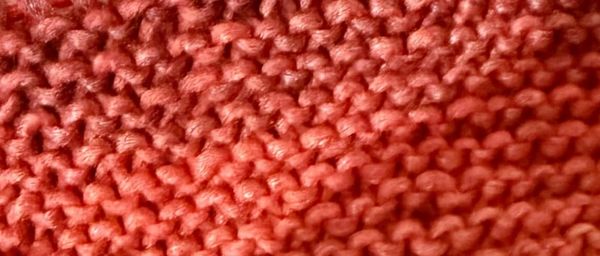
Knitting is hard. It's unforgiving in a way sewing isn't. And yet I carry on. I don't mind the gaps and holes in the knitted whatever-it-is I'm making, because — like quipu, the knotted cords used across the Andes to keep records — they hold a message: a tale of an interruption, a worry, a thought that arrived mid-stitch and entered the work for a moment, as a dropped stitch, a loosened tension, a split thread.
I was about to sign this piece off, but then I remembered my son, and what I made for him. In among earning money, the emotional labour of a family member's illness, and making sure my care for her — my sister's — precariousness reached her across continents, it was also my son's 20th birthday. I made him a handmade card, which I can no longer find (perhaps it went out in the recycling), and a rushed, appliquéd t-shirt in the style of a football jersey, poorly done, if I'm honest. Later that day, England got knocked out of the World Cup — "on my birthday, Mum, so unfair" — so the shirt ended up feeling a little grandiose. But the act of making had helped move me through the worrying hours of waiting for news from an operating theatre in the Middle East, where my sister lay in someone else's hands, and it made sure I felt like some adequate "ceremony" had been effected for 'The Birthday'.
I am also in the act of "making" a plan — I want to take my textile tasting-menu experience on a road trip. Arguably I just want to go on a road trip, and the textile experience somehow justifies it, but chicken or egg, no matter: I want to make thinking-with-textiles into a moment for regular people. To move around the country finding communities nested in regions with interesting textile histories, and host a simple workshop, around a 'portable table with history and character' (working brief) and bring people together. This wouldn't be to make money — it would be to test, outside of any classroom, whether the ideas about materials and meaning I care about actually hold up among regular people, doing regular things, with their hands.
Eventually, it's around this theme that I'd like to direct my PhD. But I find that every day, administrative shit gets in the way, or "making a home," or "making lunch," or whatever. There's a long lineage of women designers who've said this before me: that design made by women is almost always interrupted design — stitched into the gaps between everything else that needs doing. My knitting shows it. My daily rhythm shows it. I have a feeling I should just pick a date, grab some people, and make a start, and not worry too much about sourcing 'The Table' (working name for the experience is The Maker's Table), and of course I am now semi down a rabbit hole on Marketplace looking for a suffiently, old, but low cost four legged friend (made of wood) that I can lift, fold, and shove into the back of my Blue Jeep.