Wedding Dress

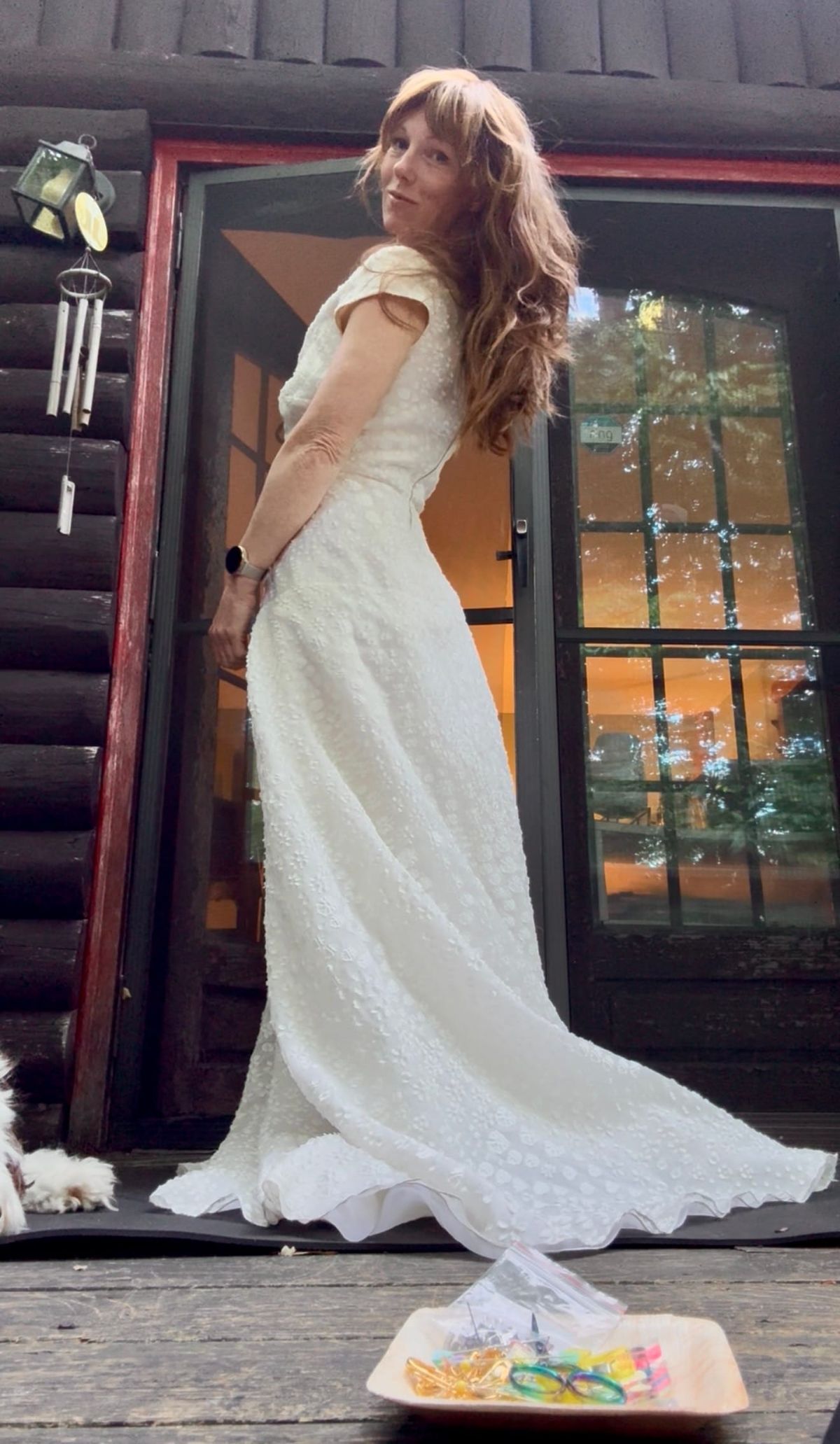
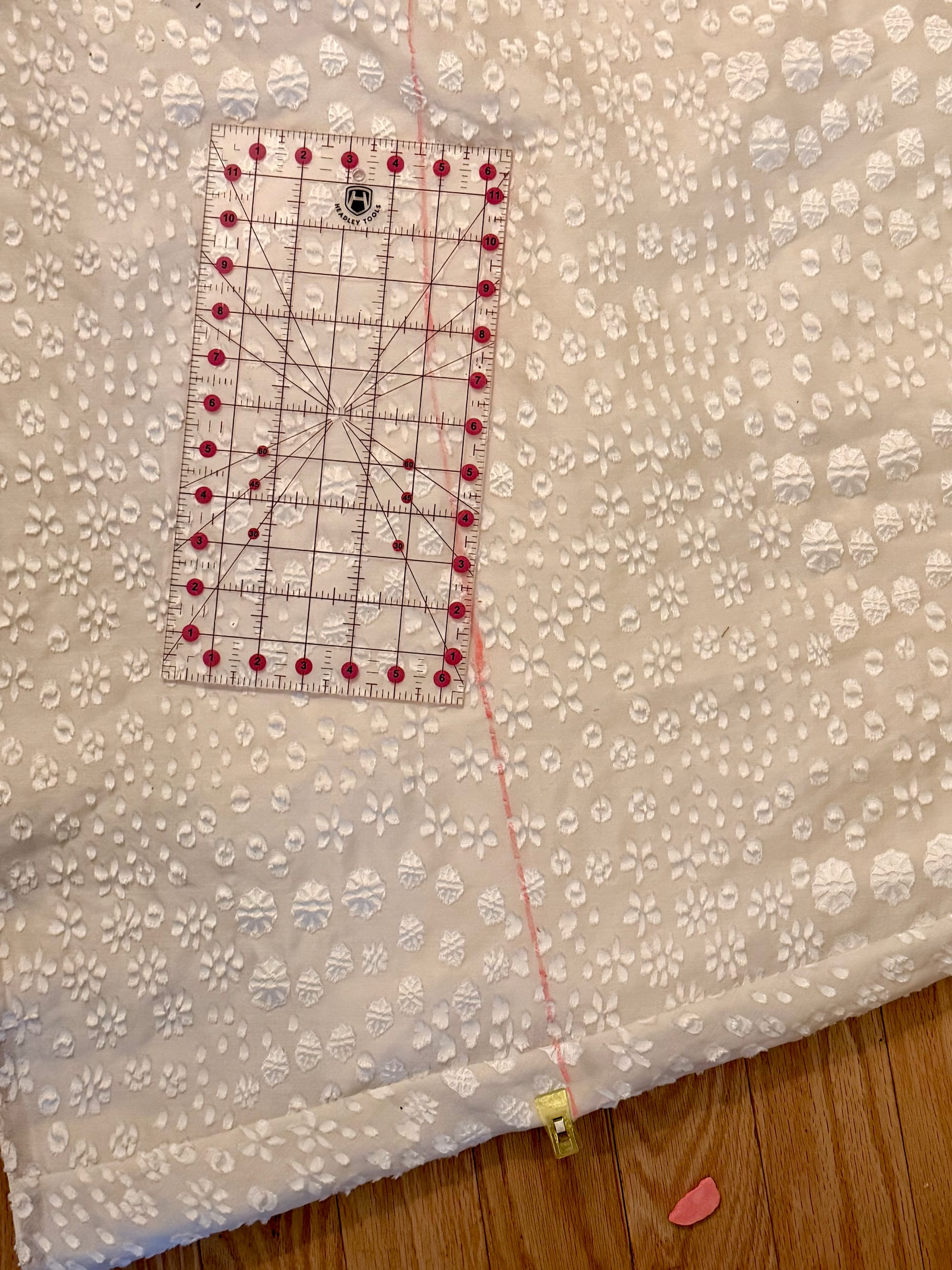
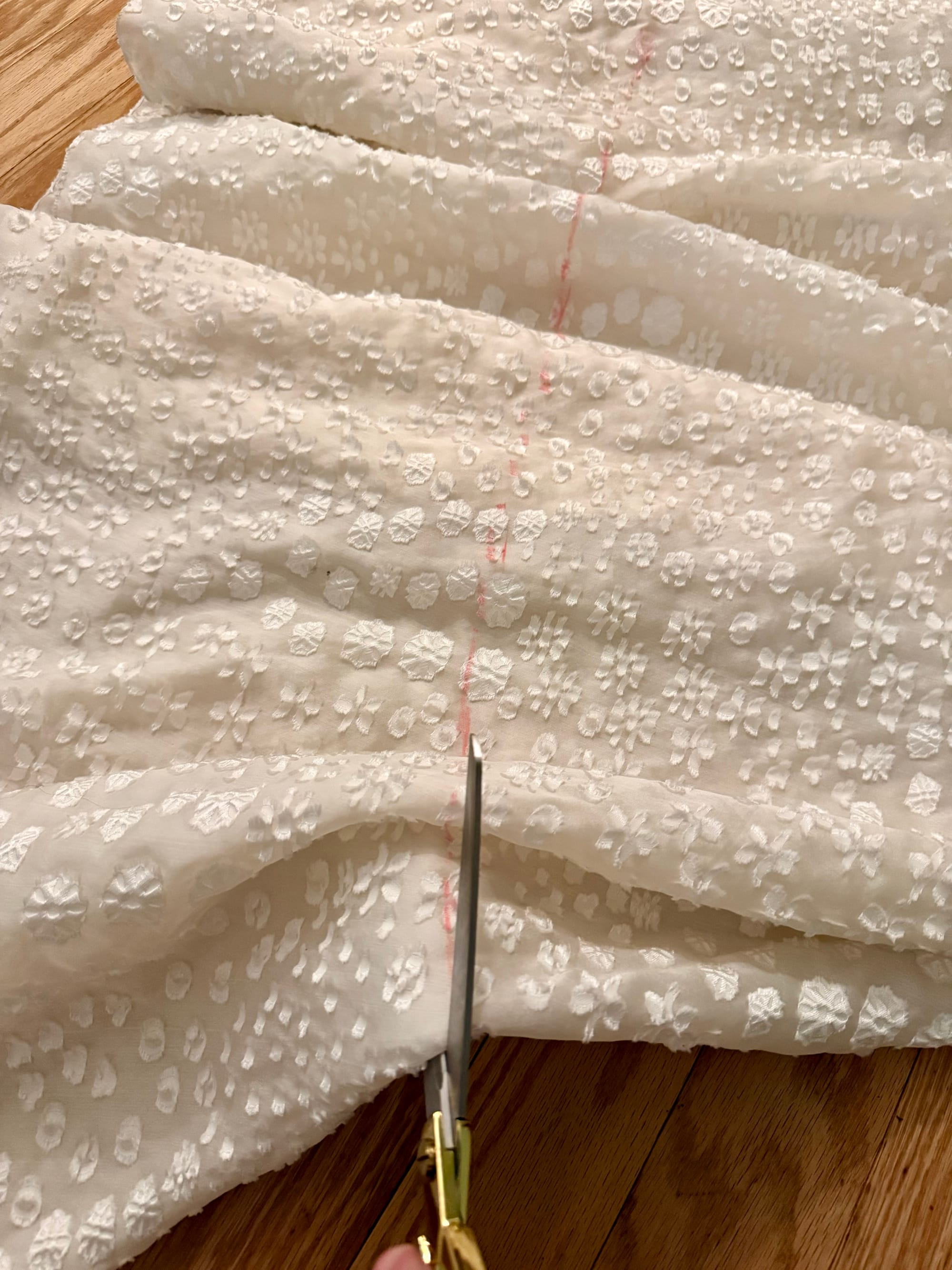
So I began work on The Wedding Dress. I measured twelve inches from the bottom, and with a lively pink tailor's chalk, marked the "borderline" between ceremonial gown from the past and novel item to wear at workshops. Working closely with the fabric gave me a greater appreciation for the work that had gone into it — justifying its eye-watering price. I, like many other dressmaking and fabric enthusiasts (as I've learned), take great pleasure in looking inside a garment — the seams, the hemming, the linings — to understand the inner architecture behind the outer impact. All I can say is, a little like looking at the topo for a climb slightly above my grade, I felt — well — a tad intimidated. Pressured to "get this right," or, in my own vernacular, "don't screw this up." What was it I said earlier, about perceived competency and the risks that come with it?
I took the fabric shears to it and felt, of course, "emotional." No — not for the failed marriage. Rather, the gravitas of cutting into something this beautiful. This is not the first time I've witnessed the power of materials to alter affect. A workshop I did recently — The Workshop of my career — involved me taking scissors to finished items of embroidery and clothing, and this was not a neutral experience at all. So much so that I debated, inwardly, the ethics of doing it at all. My own ethics panel — me, myself, and I — landed on the position that since everything I used in the workshop was thrifted, already discarded, it was ethically "okay" to repurpose it, even into an unrecognisable form. But it was also clear, weeks later, in the room, that participants felt the same magnetic pull the garments seemed to exert: 'think carefully before you cut me up'. And they too didn't always feel comfortable with wielding the knife. Baby clothes and embroidery were particularly powerful here.
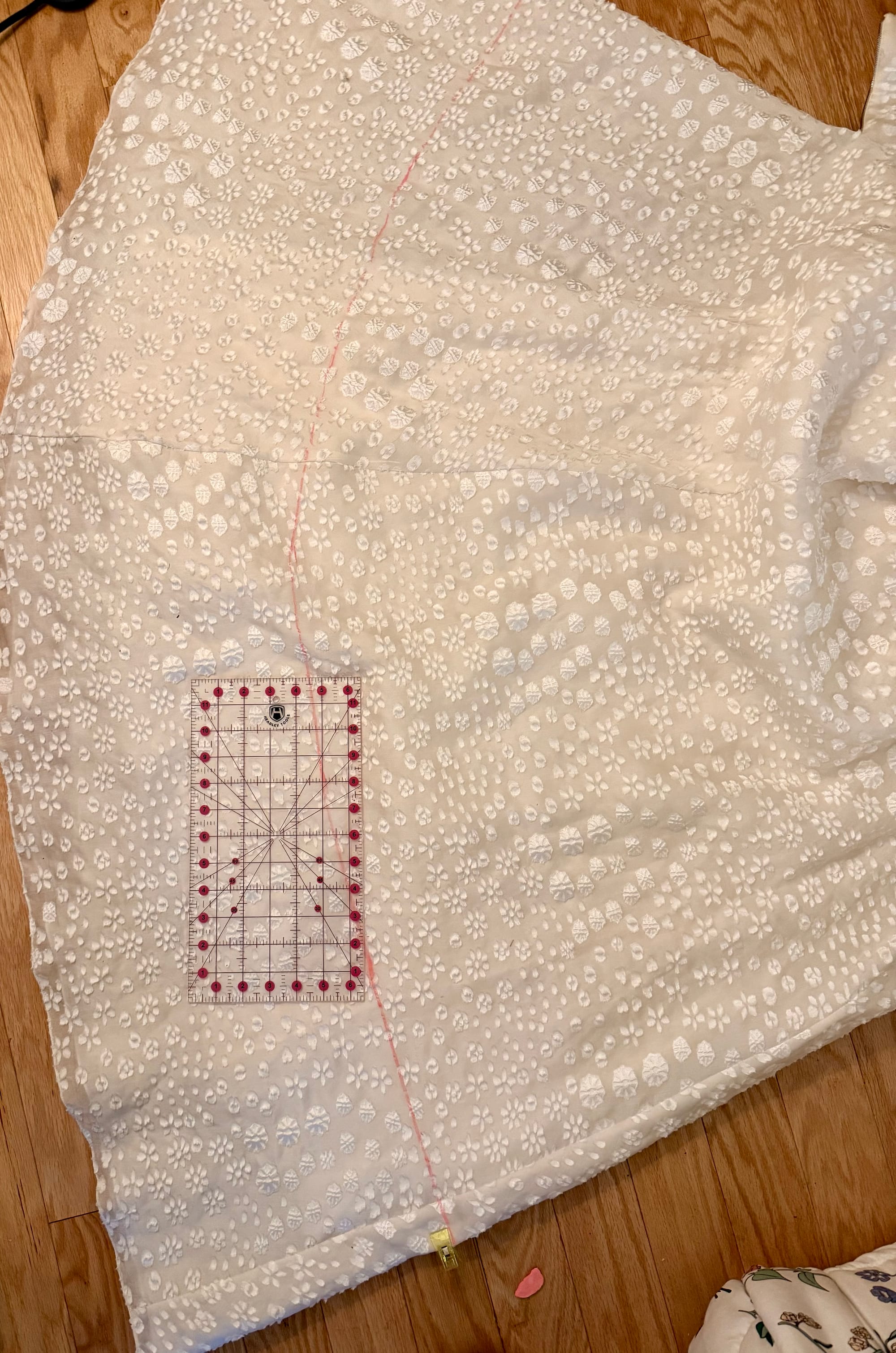
Anyway. I felt the emotion. But I still cut. The cut wasn't entirely straight — more the trajectory of someone learning to swim in choppy water than the clean wake of an ocean liner. And that was enough for that night. I took myself off to bed with some knitting to ruin and the dress hung near the nightdress.
THE WEDDING DRESS, quietly, for once: I was born on Madison Avenue. Worn on the steps of City Hall in New York City. Then endured nearly ten years of nobody touching me. And now, twelve inches, gone, on a random sunday in July somewhere in the Catskills. What kind of a narrative arc is that?
THE NIGHTDRESS: How does it feel?
THE WEDDING DRESS: Lighter. I didn't expect lighter.
I haven't chosen the lace yet, or the trim for the décolletage. I've looked. I haven't bought. I had, however, decided that — like with the nightdress — I was going to take great care of the underneath, the internal architecture of the garment. After all, this is arguably an underneath job — I'm not changing the external "gist" of the garment, only its length. In this case the 'great care' would need to go into the hems: the external hem (the one the public sees, and the one which will eventually launch the lace) and the two — yes, two — underskirts that give the dress its shape. I decided I'd overlock all of them, then bias-bind them with Dupioni silk tape. Not the average stuff you get from Walmart. Just saying.
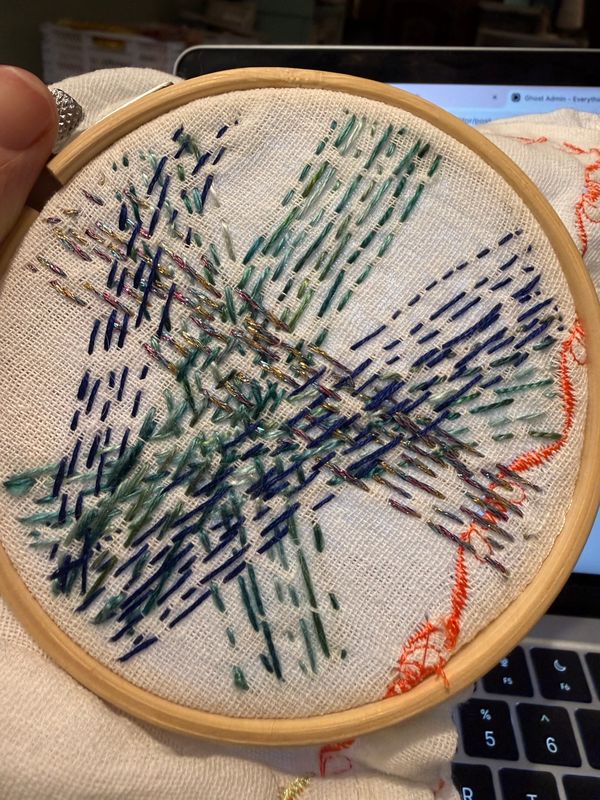
So today, in between sending emails to textile venues for the Maker's Table initiative (no responses yet, sigh, I am writing this feeling sad with discouragement), and making beautiful embroidered PR packs to hand to local venues (which I did not get to distribute because my son needed a grocery run and well. I want to 'pitch' to the library and local coffee shop like I am SOMEBODY not NOBODY), I decided to take the first step and overlock the somewhat jagged cutting lines from yesterday.
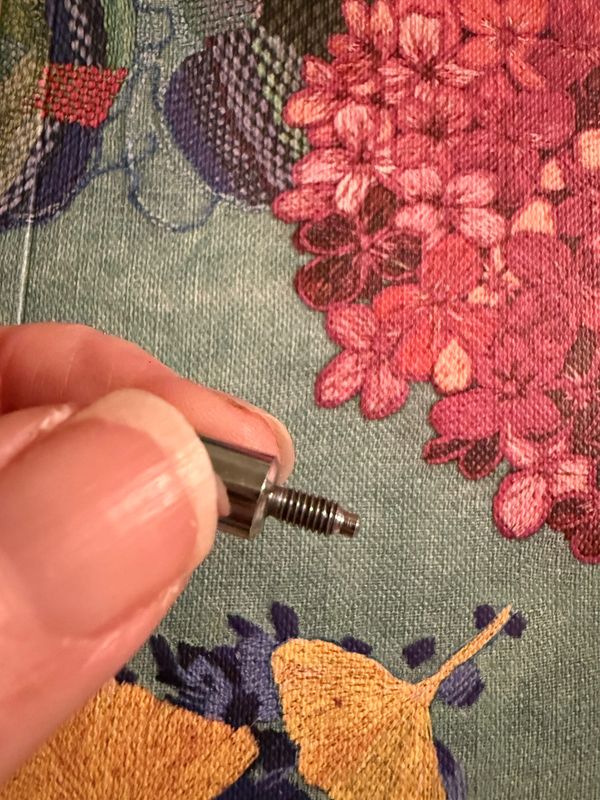
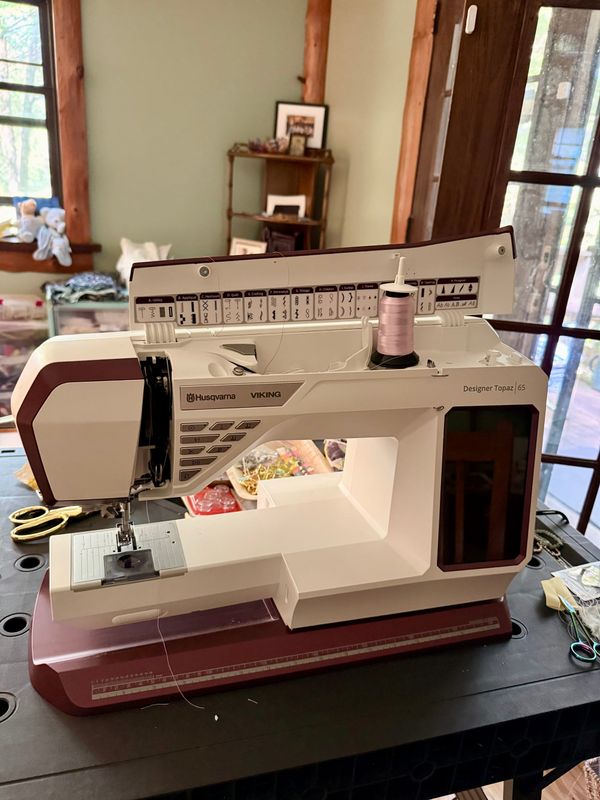
In an unusual commitment to best practice, I changed the universal sewing machine needle to one better suited to the stretchy fabric of underskirt number one, and — lo and behold — the new needle fell straight out of its clamp as soon as I began sewing. Try as I might, I couldn't get the clamp to hold the needle.
Of course the machine refused to play along. I'd gone through the whole emotional drama of cutting a garment worth thousands of dollars, fantasised about lace and dupioni silk, and done good, solid thinking about actual hemming, and here — the very backbone of the machine, one of its most prosaic, tiniest parts — basically broke, right as I pressed play. This is, effectively, a BRAND NEW machine, and this is the second part to malfunction. I am not delighted about this at all. The machine cost almost as much as the dress. But I did a bit of diagnosis, and hopefully I just need a new, tiny screw.
A PANEL RECONVENES, INCONVENIENTLY, MID-OVERLOCK
THE SEWING MACHINE (brand new, expensive, unimpressed with itself): I would like it on the record that I did not ask to be this expensive and this fragile at the same time.
THE NEEDLE (having just fallen out of its clamp): Don't look at me. I'm a needle. I do what the clamp tells me.
THE SEWING MACHINE: The clamp is also me.
THE NEEDLE: Then perhaps have a word with yourself.
THE WEDDING DRESS (watching from adjacent to the chair — not the chair, never the chair): I spent ten years being the difficult one in this room. This is new for me.
THE SEWING MACHINE: Don't get used to it.
THE WEDDING DRESS: Oh, I intend to enjoy every second.
But, since we're talking about emotions — the knowledge that I can't sew anything on my machine right now has made my overarching life outlook a bit more lukewarm. Not to be dramatic about it, but this is true. I feel a bit - ahem - sad. I like having all my making items, tools, fabrics, papers, pens, books, ready to pick up and play with, to co-create with me, to partner with me on a whim, and now I am finding I feel, almost, well, slightly, sort of longing every time I walk past it, not like the loom which I still neglect to this day. It's okay — I have plenty of knitting to try not to ruin, and a hand-stitch book for my book club that needs work, but — I don't know — that beautiful machine has so far given me almost daily joy, and I don't know how I feel about it being out of commission for a while. I certainly don’t feel like purchasing the lace until it's working again.